The Greater Köpenick Round Trip
Seddinsee
Description
The Seddinsee is an elongated lake on the south-eastern city boundary of Berlin. It stretches for 4 kilometres, with a width of about 500 metres, between the village of Gosen and the Köpenick district of Schmöckwitz. The maximum depth is 7 metres, the water surface about 370 hectares.
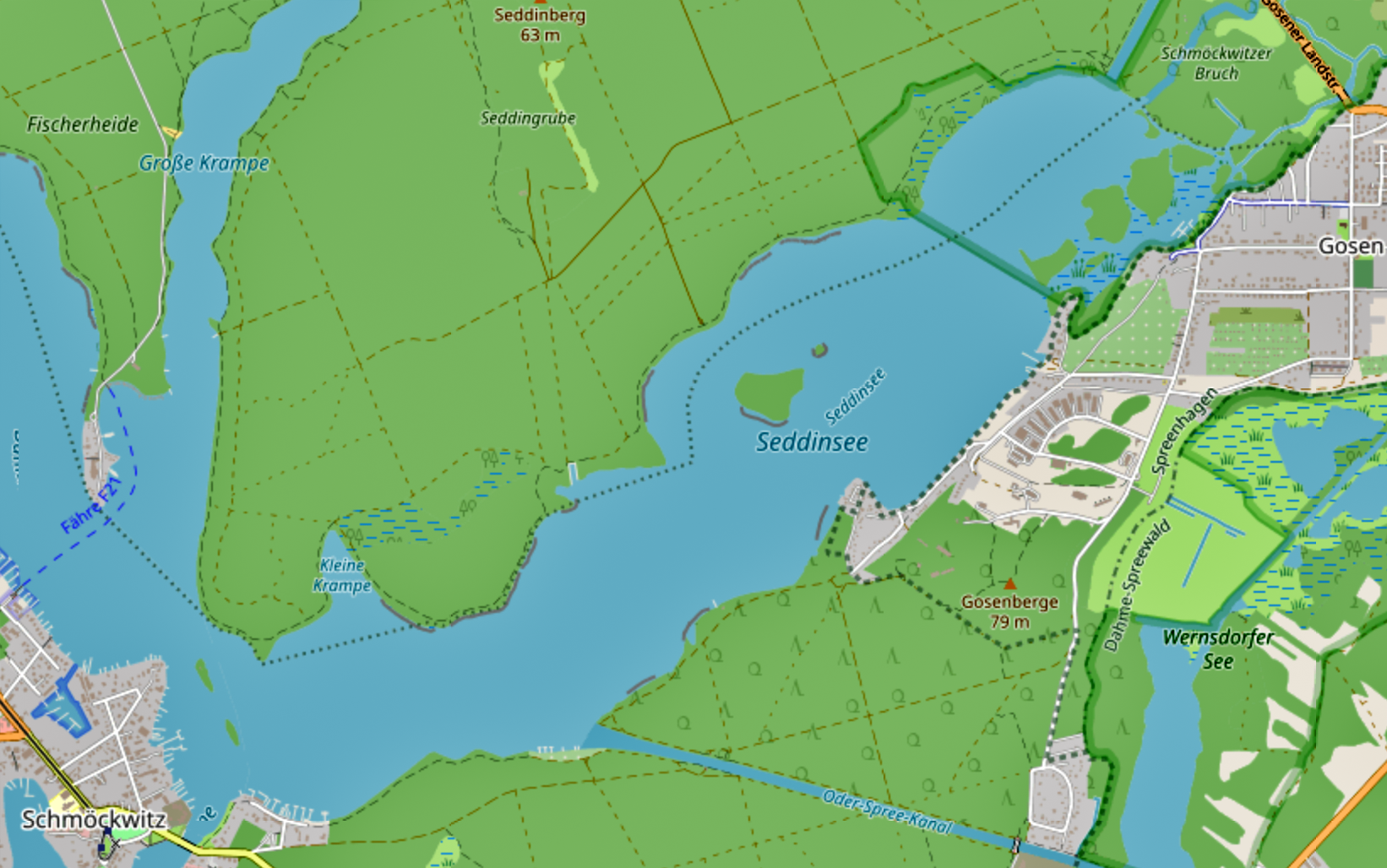
At the north end the Gosener Canal and the Gosener Graben flow into the lake. At the south‑west end the Seddinsee meets the Dahme, so the lake can also be regarded as a side bay of that river. Together with the Langer See and the Zeuthener See, which are extensions of the Dahme, as well as the side bay Große Krampe and the slightly more southerly Krossin-See, the Seddinsee is part of the extensive lakeland in southern Köpenick. The Oder-Spree Canal flows into the lake in the south‑east.
On the north‑east shore of the lake lies the municipality of Gosen and an associated bungalow colony; otherwise the area around the lake is wooded.
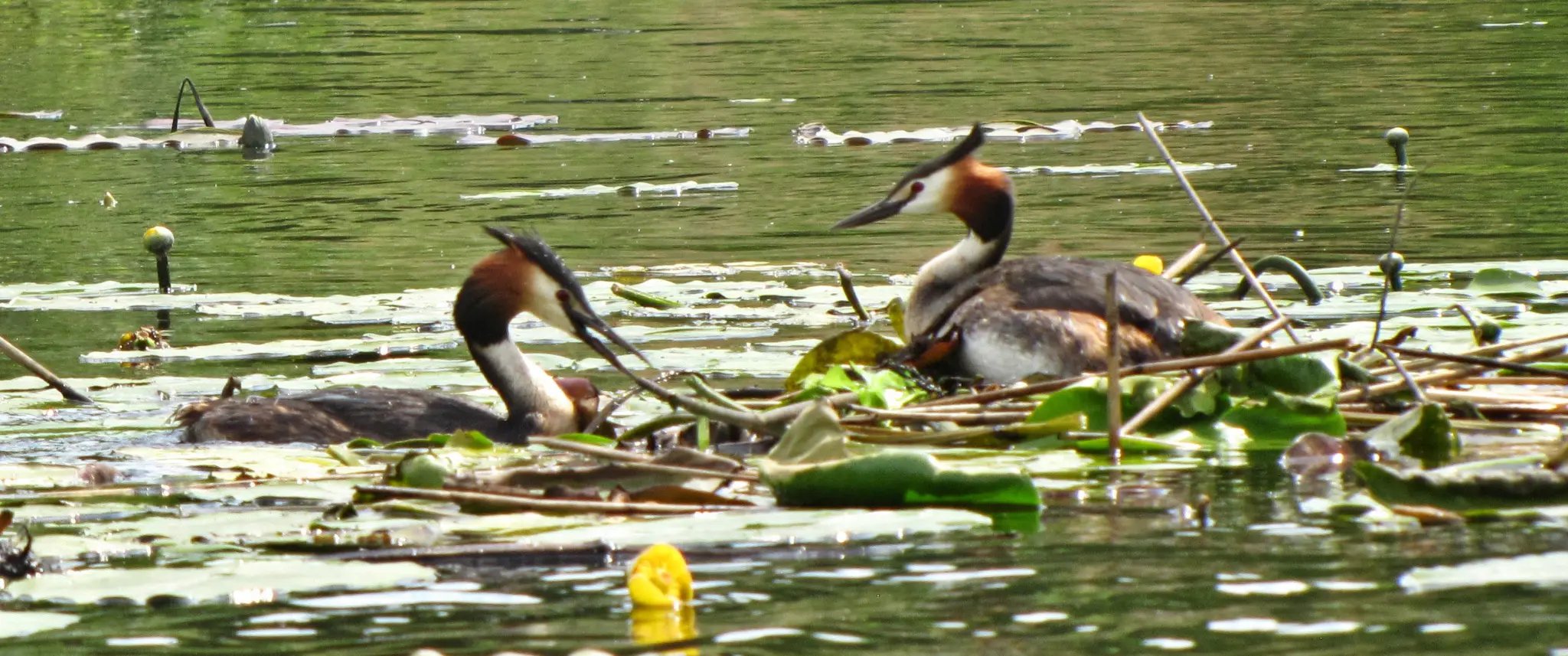
In the area near the mouth of the Gosener Canal there are pristine bog areas with peat layers up to 7 metres thick. They are part of the aforementioned Müggelspreeniederung nature reserve, which extends northeastward to the Dämeritzsee and includes the Gosener Graben. Many waterfowl such as great crested grebes, common coots and swans can be found in the district; kingfishers and white-tailed eagles also nest here.
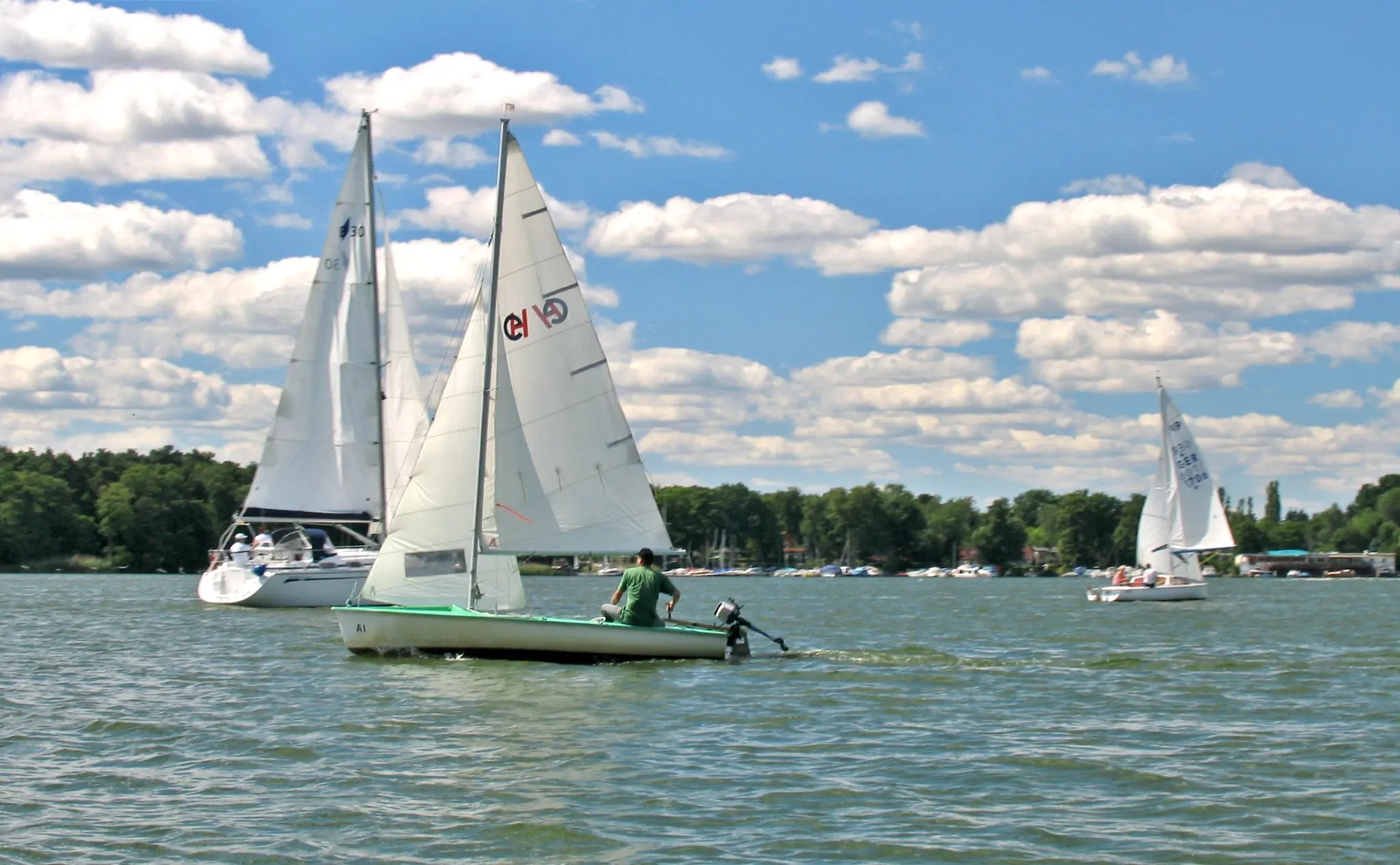
On the other hand there is also a sandy beach and a campsite. There the water slopes off quite shallowly and is therefore suitable for bathing with children. The lake is also used by sailors and paddlers, who benefit from the numerous waterway connections that lead out from the lake.
There are several islands in the lake. In front of the aforementioned bungalow estate lie the islands Nixenwall, Dommelwall and Berg; about halfway along the lake are the islands Seddinwall and Kleiner Seddinwall. Immediately at the mouth into the Dahme are Weidenwall and Werderchen.
In connection with an island in the Seddinsee Theodor Fontane tells a curious story in his "Wanderungen in der Mark Brandenburg". It is entitled "Der Fischer vom Kaniswall" and is embedded in his account of the boat trip on the "Wendische Spree" — that was the name for the Dahme in Fontane's time.
Robinsonade of the fisherman from Kaniswall
Today’s surviving Kaniswall between Neu-Zittau and Gosen is attributed by Fontane to a fisherman named Kanis. At the end of the 18th century he built the embankment in the otherwise marshy area in order to settle there. He operated a ferry across that arm of the Spree which at the time flowed directly into the Seddinsee (Fontane calls it the “Rahnsdorfer Spreearm”). The “Alte Spree” and the “Große Strom” that still exist between the Spree and the Seddinsee are remnants of the former river course.
The fisherman had a very pretty young wife whom he guarded jealously. She came from Schmöckwitz. After the battle of Jena-Auerstedt, which Prussia lost, Napoleon entered Berlin as victor on 27 October 1806 — and with him his soldiers.
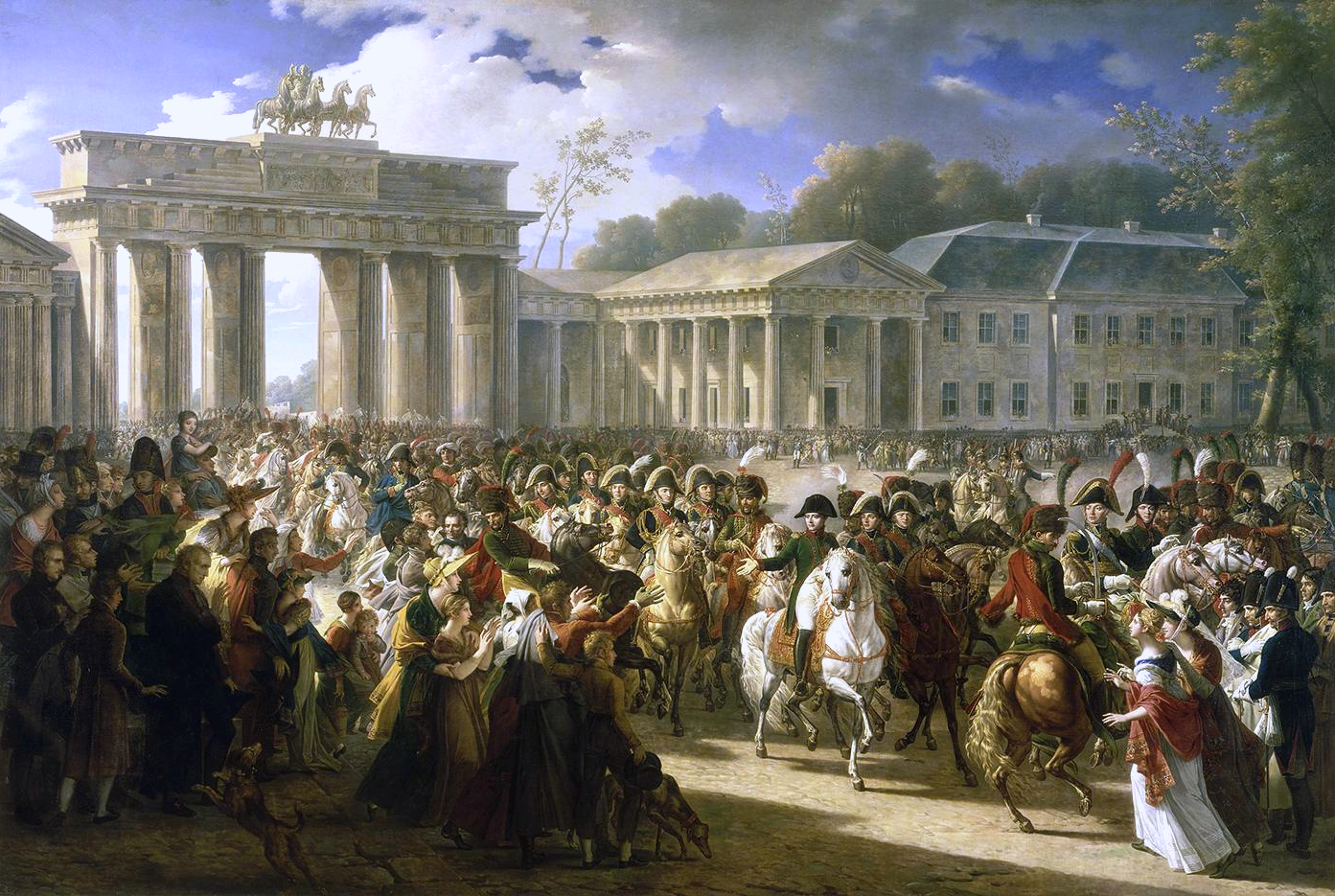
When it became known that the first French cuirassiers had entered Köpenick and would also be billeted in surrounding villages, Kanis persuaded his wife to withdraw with him and their children to an island in the Seddinsee. The fisherman moved there with his family, set up home and eventually did not return to the Kaniswall. He died in 1850.
Following are some excerpts of this story as Fontane relates it:
“Fisherman Kanis kept a ferry where the Rahnsdorfer arm of the Spree enters the Seddinsee. The little house he lived in had, because of the marshy ground, been built by him on a specially made embankment or wall, and since everything was then without fixed names, this stretch of wall where his little house stood received the name Kaniswall. The settlers of Gosen and Neu-Zittau, his nearest neighbours, soon forgot the name of the man who had first made the wall and the little house, and called him, after what he had made, the fisherman of Kaniswall. This name stuck with him his whole life, although he left the home named after him while still young. In the story you are now to hear, however, I will, for the sake of brevity, simply call him by his name.
“Kanis had a young wife, a Kossät’s daughter from Schmöckwitz, who was very fair-haired and very pretty, much prettier than one would have expected from her birthplace. At the beginning of our tale he had been married to her three years and had two children, curly-headed, whom he loved beyond measure. But he loved his Hanne much more. In spite of all dissuasion she had, from mere inclination for him — he was a strapping Spree man — contracted a sort of mesalliance.
“So October 1806 came. Before the unlucky month was over, the rogue French were in Berlin, and three days later also in Cöpenick. There our Kanis now saw them. They were cuirassiers… When he heard that a few squadrons were also to be stationed in the surrounding villages, he was seized by a peculiar timorous feeling, a premonition of jealousy, something he had not known before. Who could blame him? He was just clever enough to know that women, in their eternal curiosity, love the foreign and the handsome, and however much he trusted his Hanne under ordinary circumstances, he felt little surety when it came to a competition with the (French) cuirassiers, who were all six feet tall and had a three-foot-long horse-tail on their helmets…
“Kanis therefore considered how he might escape the danger, slept on it and then said the next morning: ‘Hanne, come; I do not like those fellows. They have no God and they steal children. Here by the road we are not safe from them. But I know a good place where they will not find us. It will not last forever.’ That he made the suggestion out of jealous fear he kept silent about. He acted as husbands do in their distress and did everything ‘for the sake of the children’. Hanne was a good woman and a tender mother; moreover her understanding was just about on a par with that of Schmöckwitz...
“In the late summer of the year 1808 it was said: ‘now they are pulling out’. But Kanis shook his head and said: ‘they are still there; and if they are not there, they will come back; Hanne, we shall stay where we are’. And in this our Robinson on Robinson’s Island was wiser than some of the wisest. For they did indeed come back.
“Kanis, of course, when he spoke thus, had not consulted his wisdom but only his inclination. The truth of the matter was: he did not want to leave any more. The hiding-place which he had entered two years earlier as a fugitive and at first set up only as a camp had long since become a respectable homestead with parlour and stable, with chamber and cellar, lying no longer in the middle of a reed-covered island but in the centre of a meadow rondel crossed by strips of garden and arable land and only barely enclosed by a belt of reeds. Here man and wife dug and planted like the first humans, and when at last, after the double decision at Leipzig and Waterloo, real peace came and Kanis could in honour say: ‘Hanne, now it is time’, she lowered her head and declared that she wished to stay. That was what he had wished to hear. He then also confessed to her that he had not moved to the island out of general fear of the French, but out of a quite particular jealous dread of the … (French) cuirassiers. Hanne made no fuss of this confession. She took only the flattering part and dismissed all sentimental virtue.”
(Theodor Fontane: Wanderungen durch die Mark Brandenburg, Vierter Teil, Spreeland Beeskow-Storkow und Barnim-Teltow
J. G. Cotta´sche Buchhandlung Nachfolger, Stuttgart und Berlin 1905)
That is Fontane. He calls the island ‘Robins-Eiland’. Which island it actually was is not clear from the text. From its size the Seddinwall is the most likely candidate.
▶️ Next stage: Langer See/Dahme