The Greater Köpenick Round Trip
Langer See / Dahme
The Seddinsee flows seamlessly into the Langer See at Schmöckwitz, which is fed by the Dahme.
The Langer See is an approximately 13-kilometre-long lake in the Berlin borough of Treptow-Köpenick. It is a typical ribbon lake through which the Dahme flows. The Langer See covers an area of 284 hectares. The Langer See begins at the Seenkreuz near Schmöckwitz and, after running northwest, ends at the Köpenick Old Town island, where the Dahme flows into the Spree. The stretch between the mouth of the Teltow Canal (Grünau) and the Spree confluence (Köpenick) is usually referred to again as the Dahme and not further as the Langer See Langer See and Dahme (Wikipedia).
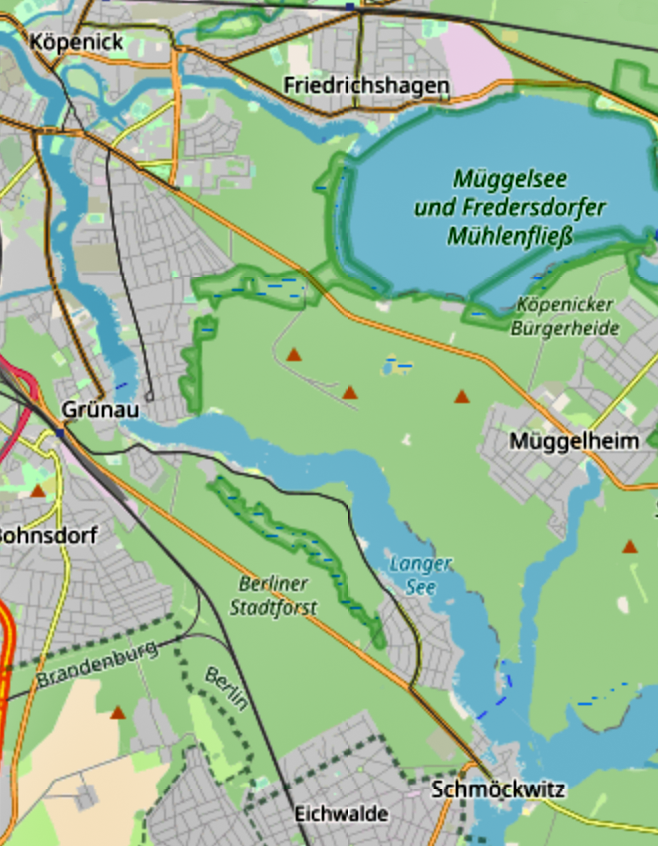
The Dahme is an around 95 km long tributary of the Spree that rises near the town of the same name, Dahme. Flowing northwards, it touches or passes through the smaller towns of Golßen, Märkisch-Buchholz and Königs Wusterhausen and empties into the Spree in Berlin-Köpenick just beyond the Palace Island.
The name Dahme may derive from the Wendish term Dembrowa = oak. Other authors trace the river name to an older name from the area’s Germanic predecessors, possibly denoting a dark river. Such ancient names were often handed down by the remaining Germanic population to Slavic settlers
(Wikipedia: Dahme).
Große Krampe
Directly opposite Schmöckwitz, between Müggelheim and the Langer See, lies the Große Krampe. It is an elongated bay (actually a glacial channel) stretching about 3 km in a north–south direction. The Große Krampe is about 100 m wide and is crossed by ferry line 21, which connects the Krampenburg landing stage (on the west bank) with Große Krampe (east bank). The bay is surrounded on both sides by the Köpenick Forest Source: Große Krampe (Wikipedia). In our direction of travel the Kleine Krampe lies before the Große Krampe.
At the head of the Große Krampe stood the Krampenburg inn until the mid-1970s. At the time the landlord advertised a visit with the name "Berliner Alpen".
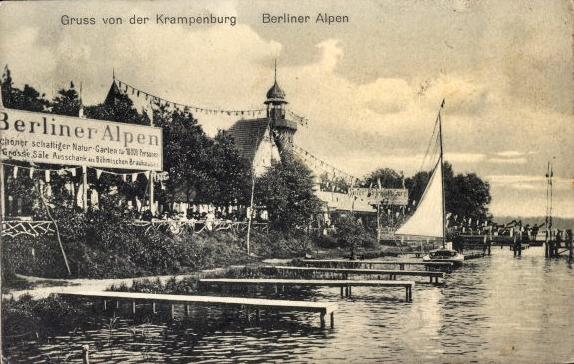
Today the site houses the “Kuhle Wampe” campsite, which was originally located on the south shore of the Müggelsee and was very popular with Berlin’s working class. For political reasons it was cleared by the Nazis in 1935. The “Kuhle Wampe” campsite played an important role in the 1932 film of the same name by Slatan Dudow. Bertolt Brecht wrote the book and Hanns Eisler composed the music for that film.
Notable features of the Langer See
In the direction we have chosen the Müggelberge with the Müggelturm lie to the right of the Langer See. On the left are Schmöckwitz, Karolinenhof, Grünau and Adlershof. Between Grünau and Köpenick the Teltow Canal branches off (also on the left in the direction of travel). In Karolinenhof Honecker’s state yacht “Albin Köbis” was stationed during GDR times. It was launched in October 1974 at VEB Yachtwerft Berlin-Köpenick and was one of four GDR state yachts used by the GDR leadership elite to receive high-ranking guests.
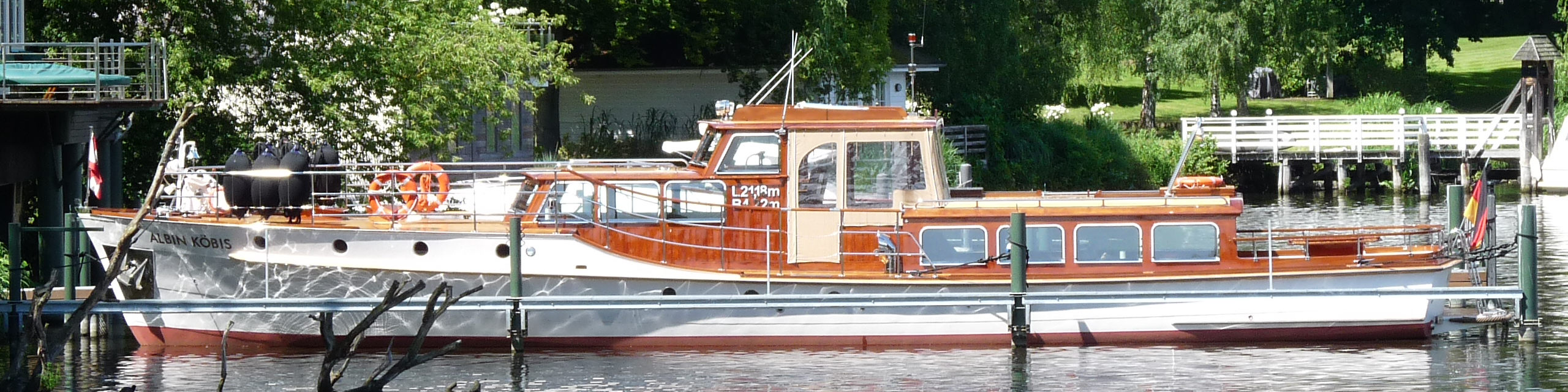
Source: Albin Köbis (Wikipedia)
The shipping company was the Ministry for State Security. The “Albin Köbis” was regarded as a kind of “official room at sea”, on which, for example, the Council of Ministers could hold informal talks with state guests and sign agreements until 1989. In the meantime the ship has been sold, refitted and resold several times, most recently to a private individual in Berlin. The ship, now renamed “Vineta”, is said to lie in Alt-Treptow. (Source: Erich Honecker's ship "Vineta" - The GDR state yacht returns, Tagesspiegel of 20.07.2018)
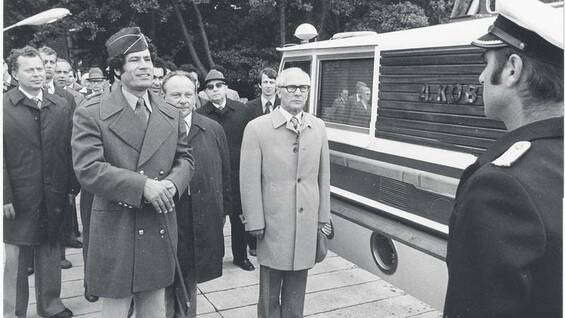
(Source: Erich Honecker's ship "Vineta" - The GDR state yacht returns, Tagesspiegel of 20.07.2018)
There are three smaller islands along the course of the Langer See:
- Kleiner Rohrwall
- Großer Rohrwall
- Rohrwall Island
The Kleine Rohrwall lies – seen in our direction of travel – shortly beyond the Schmöckwitz lake cross. Immediately afterwards comes the Große Rohrwall, along whose left-hand bank the Richtershorn boat hire and a restaurant with a boat jetty are located. The Rohrwall Island is reached only after the branch of the Teltow Canal, before after the final bend the Dahme and Alt-Köpenick with its palace become visible.
At the so-called “Bammelecke”, roughly a kilometre beyond the Große Rohrwall, the Langer See has a comparatively sharp bend. The shore juts far into the water here and from the tip there is a wide view along the lake in both directions. That pleases visitors to the nearby bathing beach and benefits the rescuers of the neighbouring DLRG water rescue station.
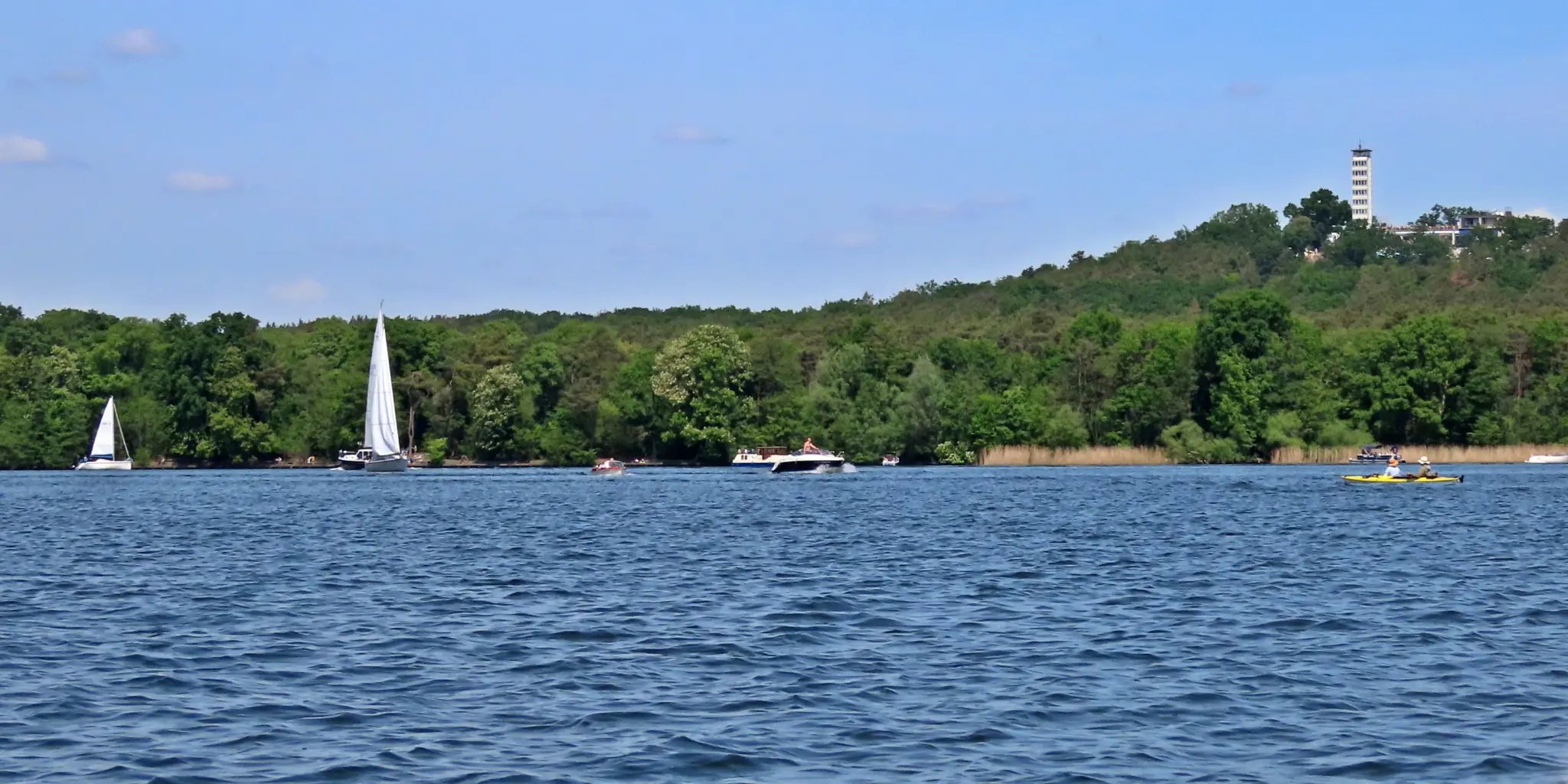
The name “Bammelecke” is said to go back to the fact that sailors coming from Köpenick, after the comparatively leisurely passage of the regatta course in Berlin-Grünau, are met here by a strong wind that they are “bammel” of…
A similar, but historical version of how the “Bammelecke” got its name was recently printed in the Berliner Zeitung:
“In the 19th century ships sailed from Silesia to Berlin, they brought building materials and food. Before the Oder–Spree Canal was built, there was a strong current at that spot, because the water flowed around the corner and the skippers were ‘Bammel’, that is, afraid that they would not make the turn.”
(Bischoff, K.: Die Bammelecke – ein Ort, an dem ich die Seele bammeln lassen kann, Berliner Zeitung, 14.8.2022)
On the shore opposite the “Bammelecke” there used to be, in GDR times, the excursion restaurant “Marienlust”, which unfortunately burned down completely, and a steamer landing stage. A short footpath along the shore and a flight of steps leads from there to the Müggelturm.
“Schmetterlingshorst”, another restaurant at the foot of the Müggelberge, which went up in flames after reunification, is at least open again as a snack bar.
The above-mentioned bathing spot at the “Bammelecke” is by far not the only place to bathe on the Langer See. Besides countless “wild” bathing spots on the right and left banks, partly also as FKK, the Wendenschloss and Grünau lidos should be highlighted.
In addition, many boathouses, rowing and sailing clubs as well as excursion restaurants have settled there. The formerly famous “Riviera Grünau” with its huge ballroom and the restaurant “Bellevue” has been a luxury retirement residence since 2021.
Between Müggelheim/Krampenburg and Schmöckwitz and between Grünau and Wendenschloss the Langer See can be crossed by regularly running ferries.
The Berlin-Grünau regatta course Regattastrecke Berlin-Grünau lies on the Langer See between the “Bammelecke” and the Teltow Canal branch. It hosted the rowing and canoeing competitions of the 1936 Olympic Games.
The regatta course is 2000 metres long and offers six lanes for rowing competitions and nine lanes for canoeing. It is owned by the Köpenick city district. Today regattas in rowing and canoe racing, events in canoe polo, dragon boat races and powerboat races take place there. Due to ship traffic and the flow of the Dahme, however, the course no longer meets current requirements for international championships.
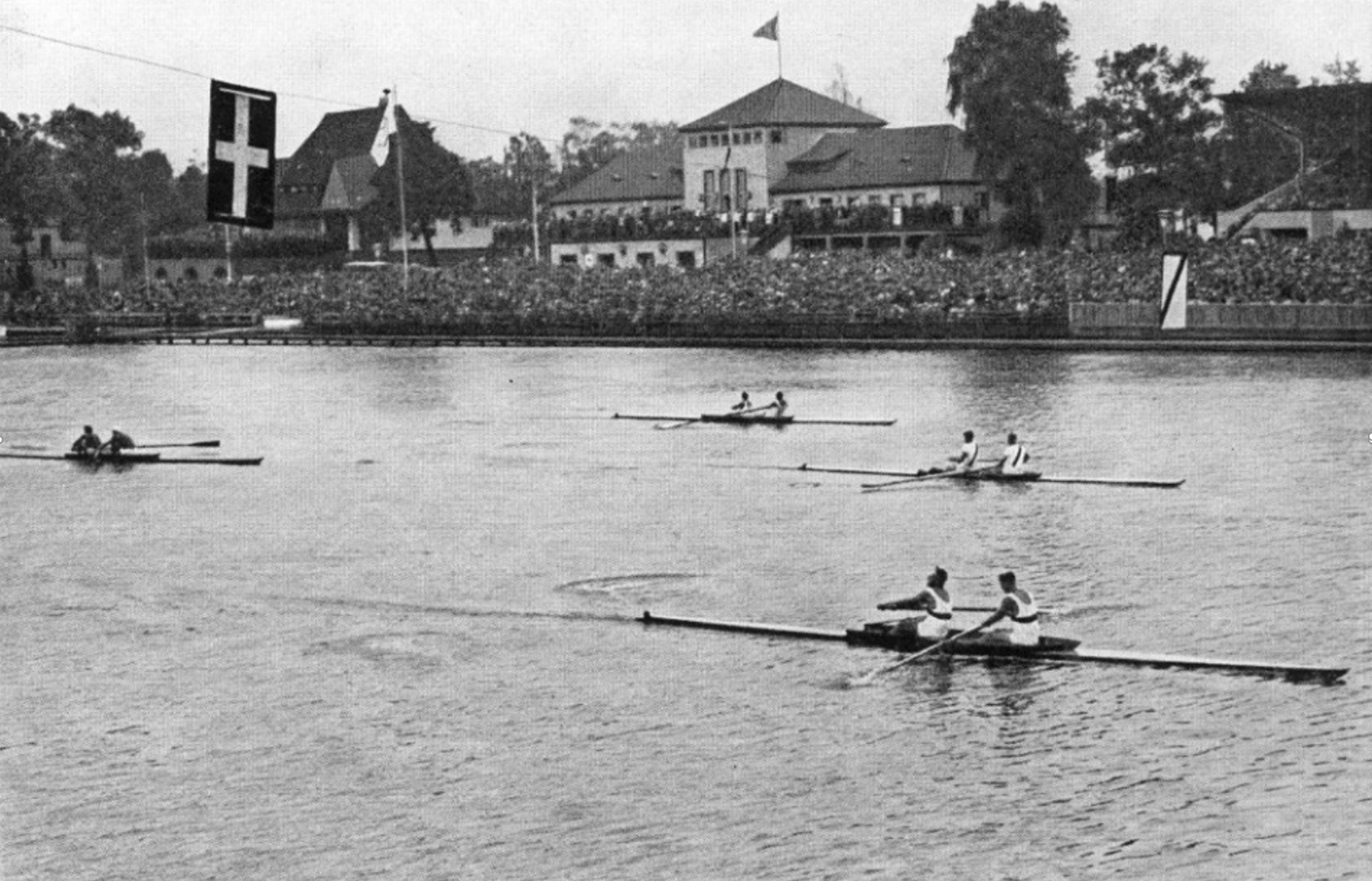
(Source: Die Olympischen Spiele 1936 Band 2, Cigaretten-Bilderdienst Altona-Bahrenfeld)
The first official rowing regatta on the course took place on 27 June 1880, and it is therefore the oldest sports venue in Berlin that is still in use.
For Berlin’s 750th anniversary in 1987 the main grandstand of the East Berlin water festival was held here, in front of which, among other things, a large jubilee ship parade took place.
Women’s crew
A short right-hand arm of the Dahme, which together with it surrounds the Köpenick Palace Island, is called the Frauentog. The name derives from the washerwomen who used to work here (Frauentog, interpreted as 'women's procession').
Due to the abundance of water, laundries have always played an important role in Köpenick. For example, the Wäscherei Wilhelm Spindler became famous; it was located in today’s Spindlersfeld district.
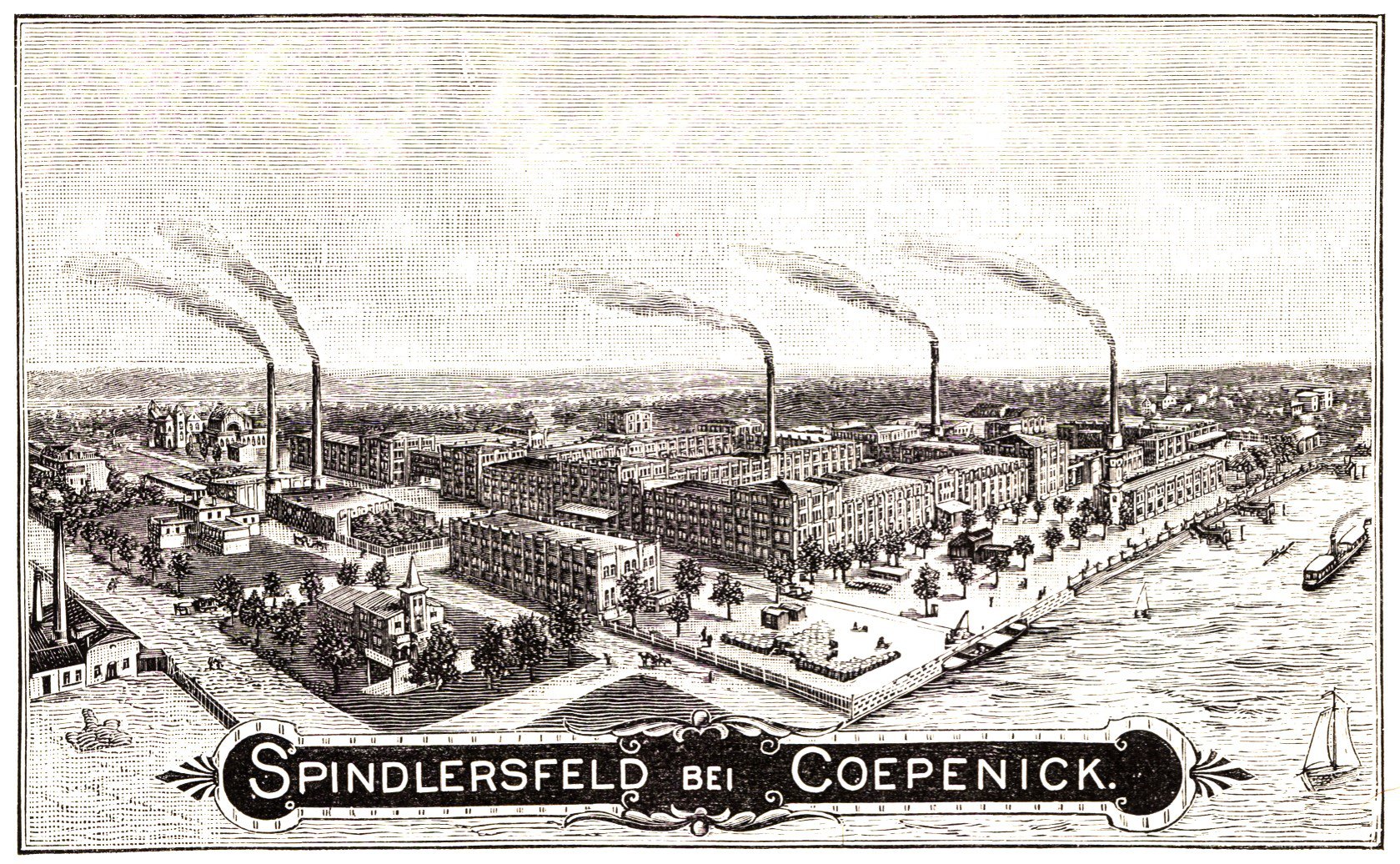

Wilhelm Spindler was the first in Germany to introduce chemical cleaning with benzole or petrol in 1854 ("dry cleaning"). The enterprise “W. Spindler - Wäscherei, Färberei und chemische Reinigung - Spindlersfeld bei Coepenick” prospered and financed, for example, the first Müggelturm made of wood and the S-Bahn line still in operation today from S-Bahnhof Schöneweide via S-Bahnhof Oberspree to the terminal at S-Bahnhof Spindlersfeld.
Köpenick Palace
The palace is located near the mouth of the Dahme into the Spree on an island in the Dahme, not far from Köpenick's old town and its town hall. The river island is connected to the mainland by a bridge.
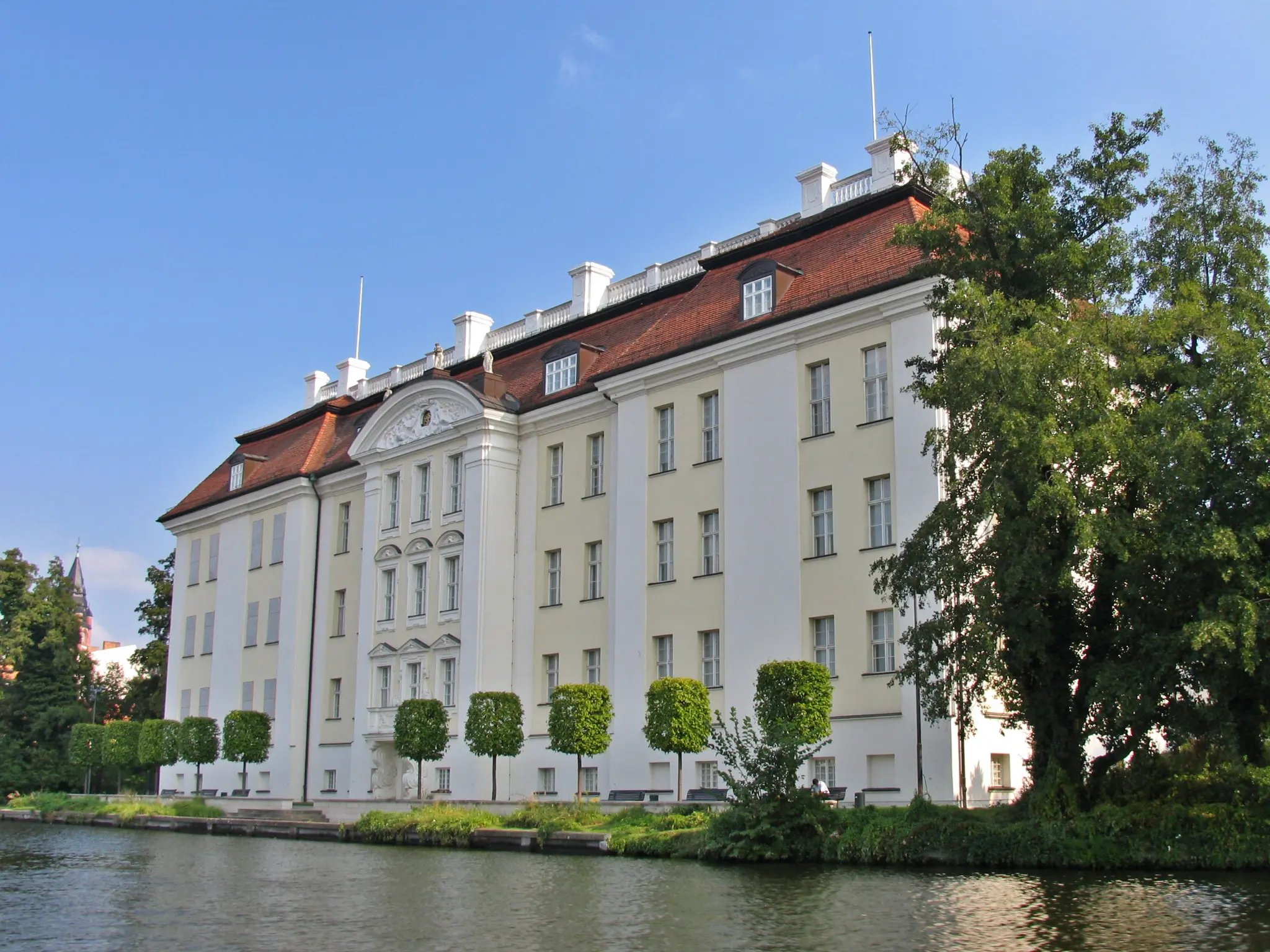
Köpenick Palace is linked to one of the most interesting episodes of Prussian history, the high treason trial against Crown Prince Frederick II and his childhood friend Hans Hermann von Katte. Crown Prince Frederick II, who later became known in history as Frederick the Great, wanted to escape the control of his father, who—because of his obsession with the "tall fellows"—was also called the Soldier King. This plan failed. The young crown prince was captured shortly after mounting his horse to flee. Soon afterwards he and Katte were placed under fortress arrest. King Frederick William I of Prussia commissioned a court-martial to decide the fate of his son and his would-be escape accomplice. This court-martial convened in Köpenick Palace. Theodor Fontane writes the following, among other things:
“On 28 October 1730 … the court-martial assembled that was to pass sentence on Lieutenant Katt of the Gensdarmes regiment, as well as on the ‘deserted Lieutenant Colonel Fritz’. This highly memorable session took place in the so-called Coat of Arms Hall…
(Theodor Fontane, Wanderings through the March of Brandenburg, Part Four Spreeland Beeskow-Storkow and Barnim-Teltow
…the sixteen officers composing the court-martial simply refused to pass judgement on the Crown Prince and condemned Lieutenant von Katte to lifelong fortress arrest. The King overturned this verdict.”
J. G. Cotta’sche Buchhandlung Nachfolger, Stuttgart and Berlin 1905)
He insisted that von Katte be executed and that the Crown Prince be present at the execution of the sentence in Fortress Küstrin.
Schloss Köpenick now belongs to the Stiftung Preußischer Kulturbesitz and houses the second building of the Kunstgewerbemuseum of the Staatliche Museen zu Berlin, whose main seat is at the Kulturforum on Potsdamer Platz.
In the Heraldic Hall, where the war tribunal once sat, there is today an opulent table service from the reign of the rebellious Crown Prince, made by the Royal Porcelain Manufactory in 1767 for Schloss Breslau. In the Schloss Köpenick further valuable Rococo-style table services from the possession of Frederick the Great are on display.
Town Hall Köpenick and Köpenickiade
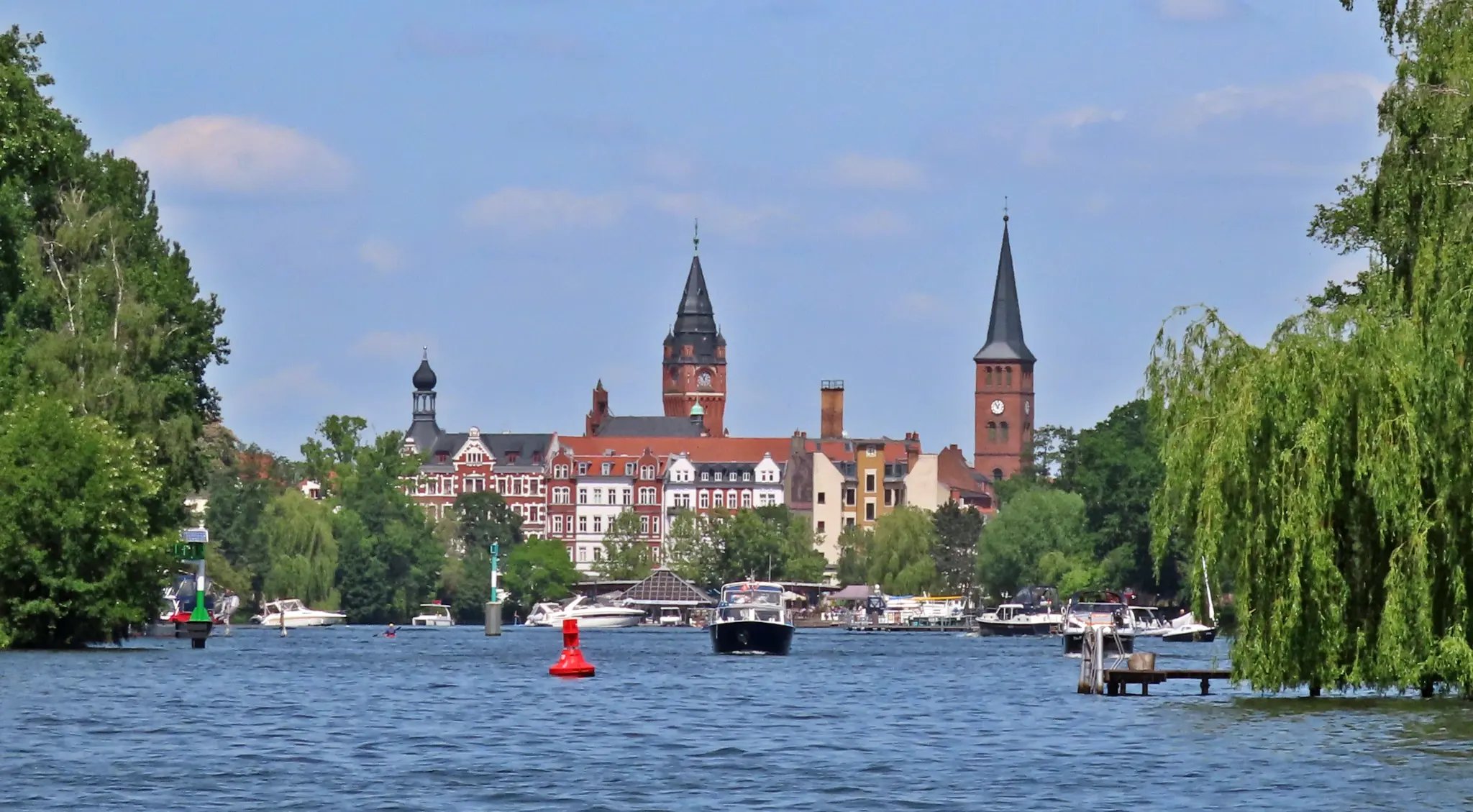
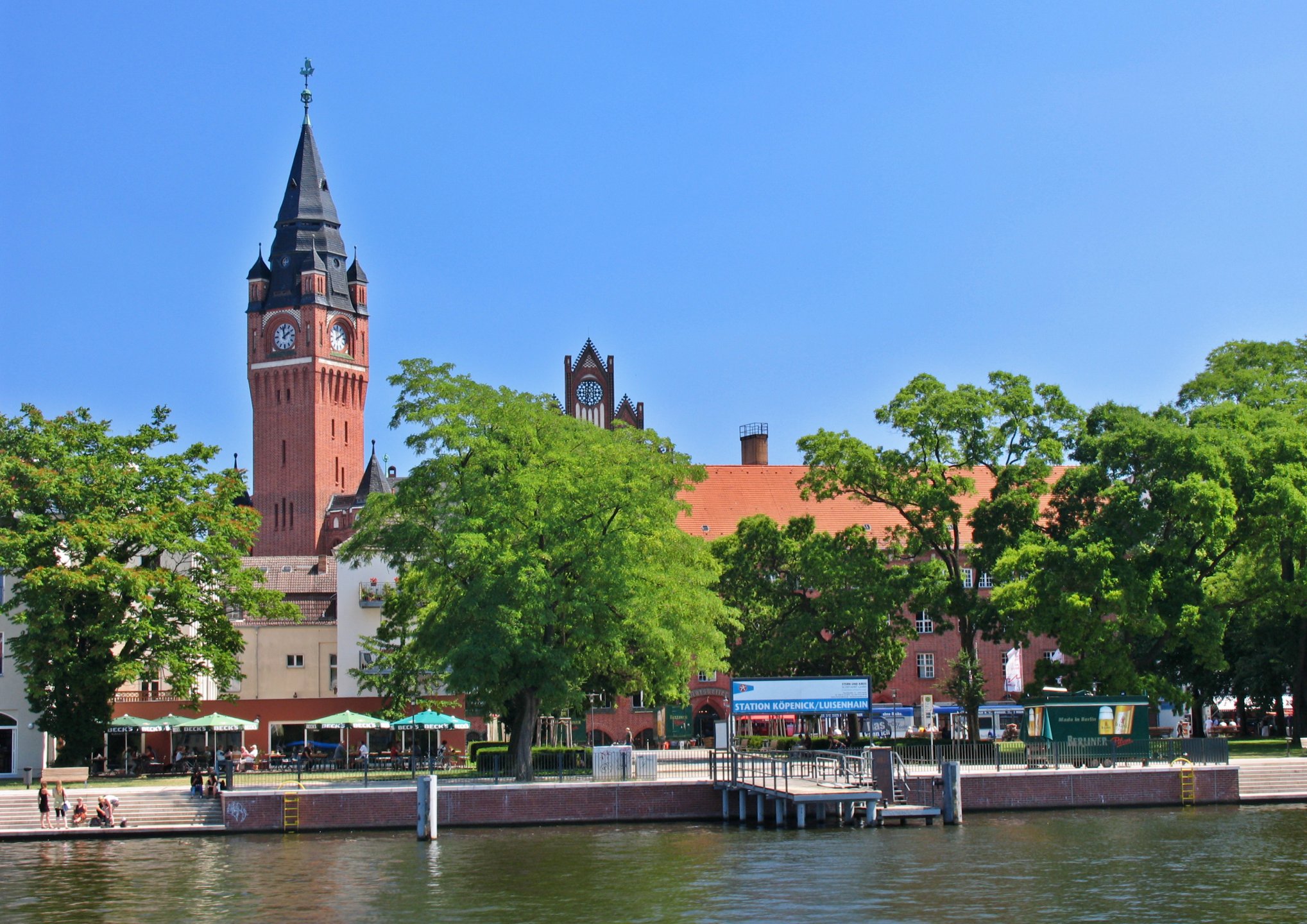
After passing Schloss Köpenick you go under the listed Lange Brücke. Then, on the right, the view opens onto Köpenick’s old town with its characteristic town hall.
In front of the entrance to the town hall stands a sculpture of the shoemaker Wilhelm Voigt, better known as the Captain of Köpenick. He had stormed the town hall on 16 October 1906 with 10 men of the Guard Infantry, taken the mayor prisoner and confiscated the town treasury. The whole world laughed about this prank and Köpenick was lampooned in caricatures, poems, plays and songs.
'You people, hear the tale that I tell from Köpenick.'
'Very clever people live there, for Köpenick lies by Berlin.'
'What happened there recently, the world has never yet seen.'
'Why does the crowd run, why do the long streets surge along so loudly? Forward the grenadiers, the king's grenadiers,
on every side fours and the corporal in front.'
'Yes, when a shining button shows, one nods one's head in reverence.'
'Köppenicken brings luck. Hence the name Köpenick...'
'The grenadiers lined up in front of the town hall — it was dreadful.'
'The people stood on the embankment, the grenadiers stood at attention.'
'Then came the noble captain, the captain, the captain.'
'Yes, what he says one believes. "The captain said it!"'
'The captain entered the town hall, and there great and small obey him.'
'Even the Köpenick police held back the public.'
'The captain counts all the loot and even takes the pennies with him.'
'But first the paymaster was sent to the new guard -'
'and then the mayor, the master, the master -'
'the cleverest of spirits, a clever Langerhans.'
'When all was done there and the captain had been away a long while'
'then it became clear to the people that he was a robber captain.'
'Now they search where the impostor is hiding. The cap has already been found.'
'They also brought the sabre and the police cry merrily:'
'"Now we've got the trousers, the trousers, the trousers" –'
'But bad luck with the case: the captain is not in them.'
'And the moral of the story: the main thing is that the captain is not.'
'The uniform commands respect, no matter who is inside it.'
'Where a uniform appears, one becomes fearful and falls silent,'
'only "Hurrah" is then shouted. Yes, such discipline,'
'we have it only in Prussia, in Prussia, in Prussia,'
'when all ropes break, discipline holds firm!'
(Otto Reuter, Der Räuberhauptmann von Köpenick)
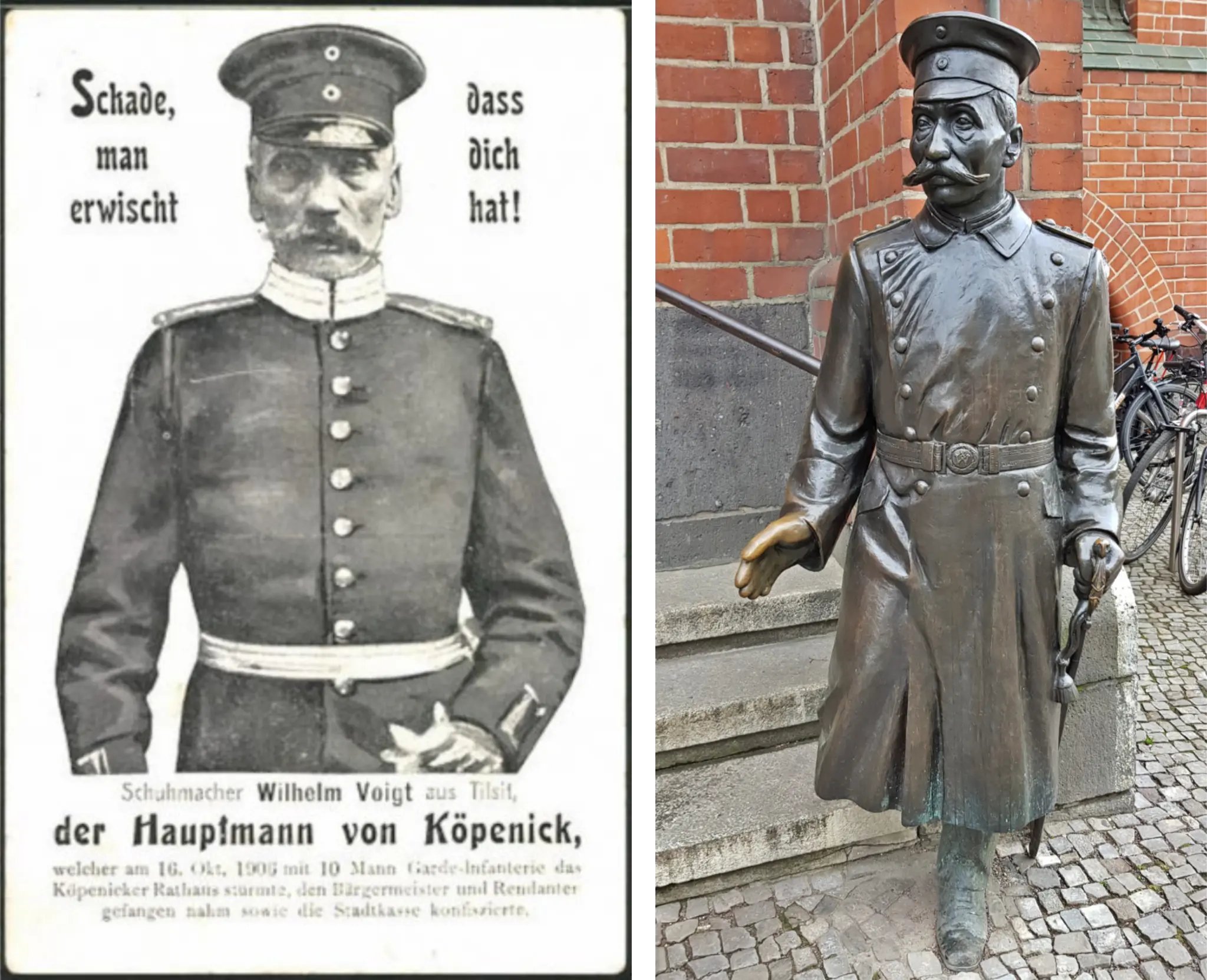
For the amusement of tourists the captain's procession is regularly reenacted in front of the town hall at weekends.
The Köpenick old town is also an important factor in Berlin's culture and tourism in other ways. There are many lovingly furnished small shops and interesting small stages here. The well-known Cöpenicker Whiskyherbst is an established part of Berlin’s event calendar.